Wedding · 5 min read · 8 July 2026
Digital vs Printed Wedding Invitations: Which Should You Choose?
Cost, timing, guest experience, and eco impact — a clear comparison so you can choose digital, print, or a smart mix for your wedding.
Wedding stationery used to mean one path: order a printed suite, wait for proofs, post the envelopes, and hope nothing changes. Today couples can choose digital invitations, printed cards, or a hybrid that uses both. The “right” answer depends less on trends and more on your guest list, timeline, and how formal the celebration feels to your families.
This guide compares digital and printed wedding invitations honestly — including when a save-the-date website or digital card is enough, and when paper still earns its place on the table. You will also find a practical hybrid approach that many modern couples use without sacrificing beauty or etiquette.
Start by naming what success looks like for you. Is it speed? Lower cost? An heirloom keepsake for parents? Clarity for international guests? Once those priorities are clear, the format decision becomes much less emotional and much more useful.
Where digital invitations shine
Digital invites are fast. You can finish editing in an evening and send the same night. That speed matters for destination weddings, shortened engagement timelines, or venue changes that would make reprinted cards expensive. They are also kinder to budgets: one template purchase can cover dozens or hundreds of guests without postage, envelope stuffing, or courier fees.
Guests abroad receive the same quality as guests next door. You can update travel notes, dress codes, or RSVP links without reprinting. For eco-conscious couples, skipping paper and shipping is a meaningful reduction in waste — especially when many printed suites end up recycled after the day. Digital also makes last-minute plus-one changes less stressful because you are not counting leftover cards in a drawer.
- Best for: international guests, flexible timelines, budget control.
- Strengths: instant delivery, easy edits, trackable replies via forms or chat.
- Watch-outs: older relatives may prefer something tangible; spam filters can hide emails.
- Tip: send a follow-up text with the image so nobody misses an email attachment.
- Tip: keep one printable PDF ready for guests who still want to display a card.
Where printed invitations still win
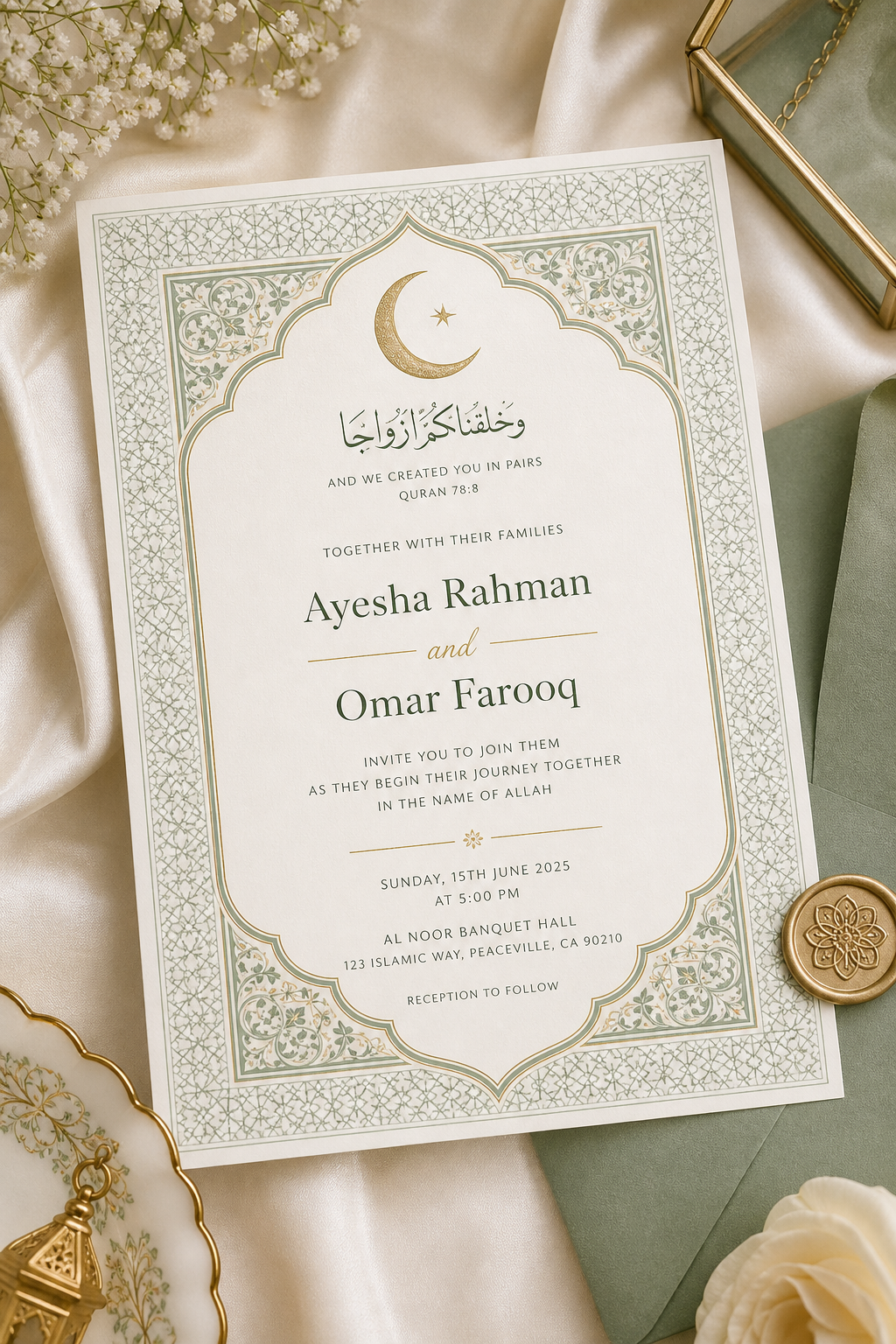
Printed stationery creates a moment. Opening an envelope, feeling card weight, and seeing letterpress or foil can signal formality in a way a screen rarely matches. For black-tie weddings, multi-event weekends, or families that keep keepsakes, paper remains part of the ritual. Grandparents often treasure a physical invite long after the weekend ends.
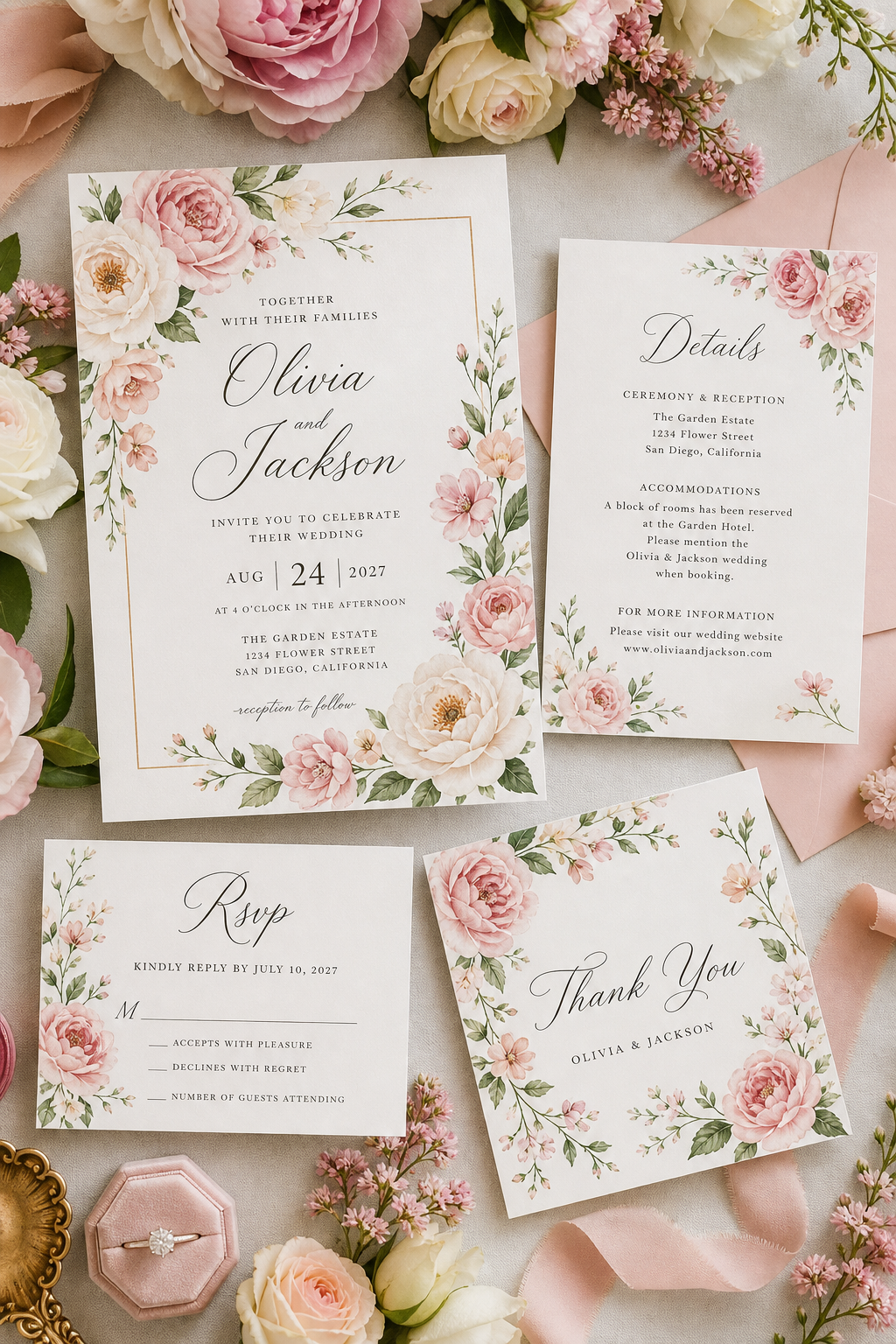
Print also helps when your celebration includes layered information — ceremony, reception, transport, accommodation — that feels crowded on a phone. A details card and RSVP insert give guests room to breathe. The trade-offs are real: design lead times, proofing rounds, postage costs, and less flexibility if plans shift. Build buffer time into your timeline if print is your primary path.
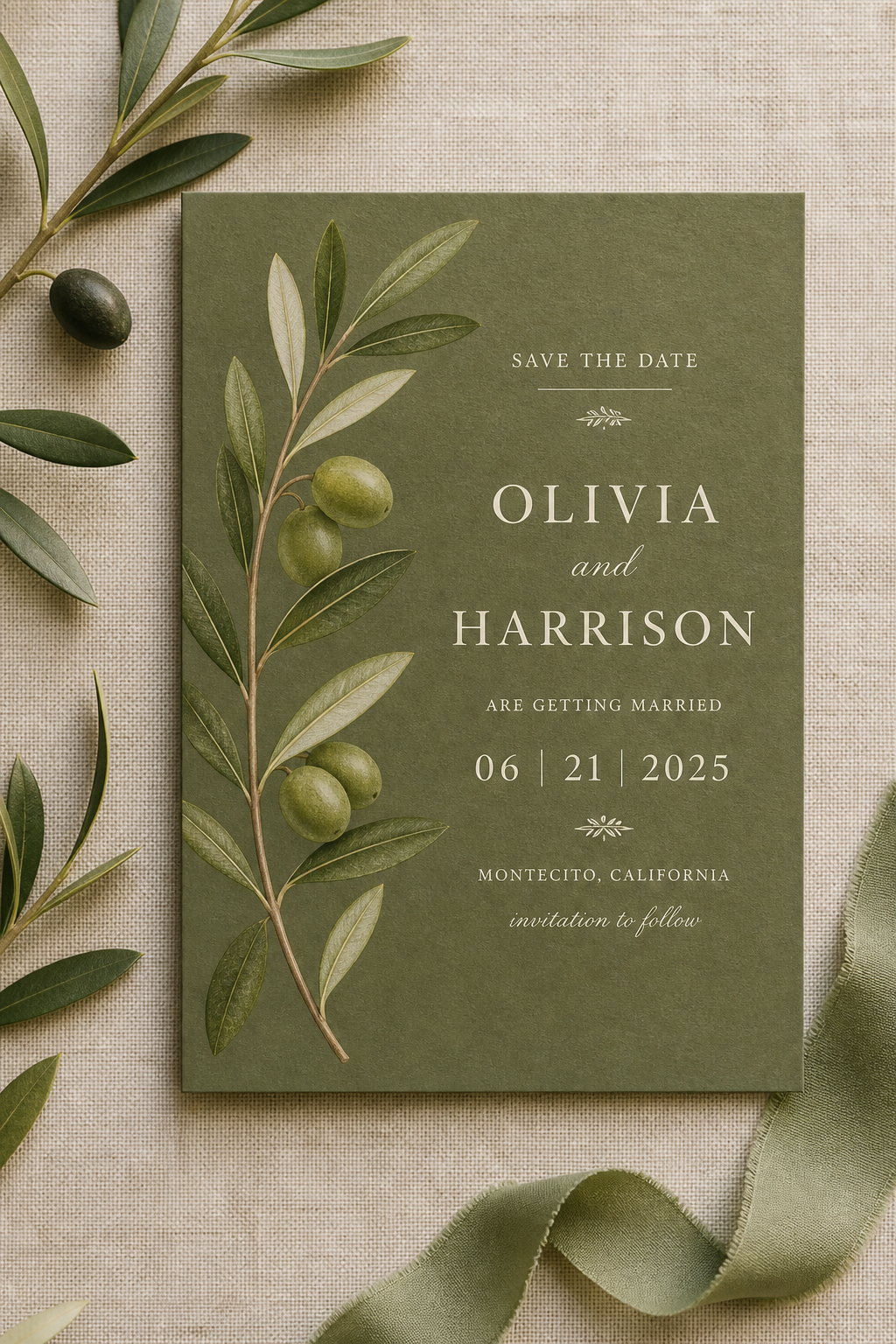
If you print, order a small proof set first. Hold the cards in natural light, check spelling with a fresh pair of eyes, and confirm that dark greens or soft olives still read clearly on your chosen stock. Colour on screen and colour on paper are cousins, not twins.
The hybrid approach most couples love
You do not have to pick a single format forever. Many couples send a digital save-the-date early — sometimes as a mini website or elegant card — then print a smaller formal suite for the final invitation. Others print invitations for local family and send digital versions to friends overseas. Both approaches feel intentional when the visual language stays consistent.
Use paper where it creates meaning. Use digital where it creates ease.
Eden Delight templates are built for that flexibility. Edit once in Canva, then export PDF for print shops and PNG for messaging apps. An olive green save-the-date design can live as a digital announcement today and a printed postcard tomorrow without redesigning from scratch. That single-source workflow also protects your brand as a couple: same fonts, same palette, same sense of calm polish.
Questions that make the decision easy
How many guests live abroad? How likely are details to change? Do elders in your family expect a posted card? What is your stationery budget after flowers and venue? If speed and flexibility matter most, start digital. If heirloom formality matters most, invest in print. If both matter, combine them deliberately and keep the visual language consistent across every touchpoint from save-the-date to thank-you note.
Whatever you choose, clarity beats novelty. A guest should know the date, place, dress code, and RSVP path within seconds. Beautiful design supports that clarity — it never replaces it. Write the information first, then dress it in the format that best serves your people. When stationery decisions follow hospitality rather than pressure, the whole planning process feels lighter.