Planners · 5 min read · 28 June 2026
Make a Weekly Planner Printable Actually Work for You
Turn an undated weekly planner into a calm system for priorities, habits, and realistic focus — without productivity guilt.
A beautiful planner can become another abandoned notebook if the system behind it is too ambitious. Undated weekly printables are forgiving for a reason: you can restart every Monday without shame and without wasting a dated book you already “fell behind” in. That reset is a feature, not a failure.
This article is about making a weekly planner printable useful in real life — with fewer tasks, clearer priorities, and habits you can actually sustain. The aim is calmer weeks, not perfect pages. If your planner reduces decision fatigue by even a little, it is already doing its job.
Begin by deciding when you will plan. Sunday evening or Monday morning both work; consistency matters more than the exact hour. Protect ten quiet minutes, put your phone aside, and treat the page as a conversation with your future self rather than a performance for social media.
Begin with three priorities, not fifteen
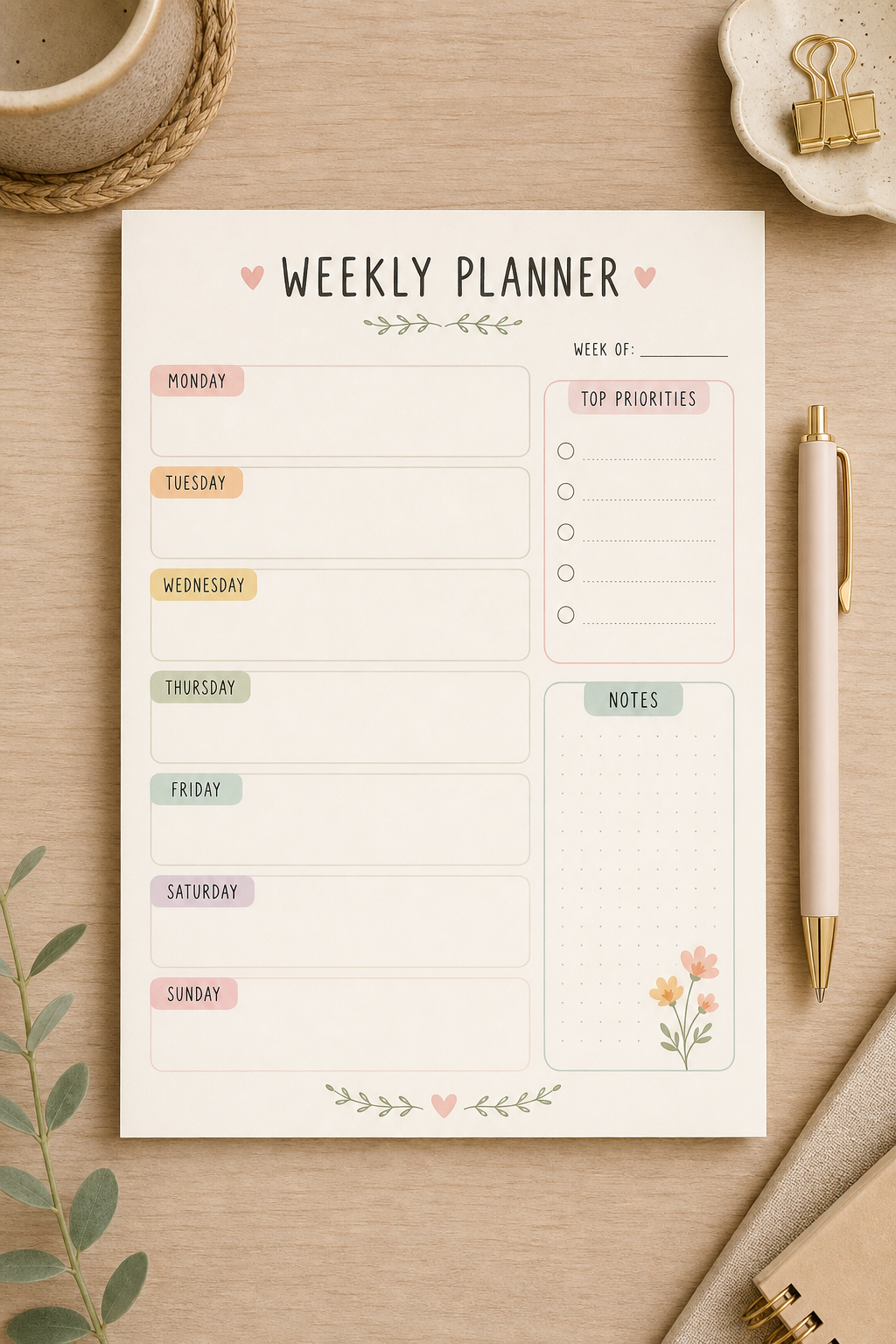
Each week, choose three outcomes that would make the week feel successful. Not fifteen tasks — three outcomes. Everything else is supporting work or optional. When you open your planner on a busy Wednesday, those three lines should still be visible and honest. If a fourth urgent item appears, decide what it replaces instead of pretending your capacity expanded overnight.
Write them at the top of the weekly spread before you fill daily boxes. This protects you from a schedule that looks productive while avoiding what matters. Outcomes can be personal as well as professional: finish a proposal, cook three real dinners, schedule a medical appointment, or protect one evening for rest.
Time-block lightly
You do not need to schedule every hour. Block mornings for deep work or family logistics, afternoons for meetings or errands, and leave white space. White space is not laziness; it is how plans survive interruptions. Overfilled grids look organised until life arrives, and then they create guilt instead of guidance.
- Put fixed appointments first.
- Assign one priority task to your highest-energy part of day.
- Batch similar chores instead of scattering them.
- Move unfinished tasks deliberately — don’t silently carry guilt.
- Leave at least one open block each day for overflow or rest.
- Review Friday afternoon and reset what truly rolls forward.
If you work across multiple roles — job, caregiving, study — colour-code lightly rather than inventing a complex key. Two or three colours are enough. The planner should be readable at a glance while you stand at the kitchen counter with a cup of tea.
Track fewer habits on purpose
Habit trackers fail when they become scoreboards for perfection. Pick two or three behaviours: prayer, reading, movement, water, language practice. Track those only. When they feel automatic, rotate one new habit in and one out. Missing a day is information, not a verdict on your character.
A planner should reduce decision fatigue, not invent new ways to feel behind.
Pair habits with existing routines. Stretch after Fajr or after your first coffee. Read three pages before bed. Drink a glass of water when you open the planner. Anchors beat willpower because they borrow momentum from something you already do.
Paper, tablet, or both
Print on thicker paper if you like pens and highlighters. Keep a PDF on your tablet if you travel. Some people print the weekly overview and keep daily notes digitally. The medium matters less than the weekly review ritual: five quiet minutes to reset priorities, celebrate what moved, and release what no longer deserves space.
Eden Delight’s weekly planner printable is undated and calm by design — use it as a flexible frame, not a personality test. Consistency beats elaborate spreads. A simple page you open every day will outperform a masterpiece you abandon by Thursday. Print a month of blanks, clip them together, and let the system stay humble enough to keep using.
If a week goes sideways, do not scrap the whole system. Circle what still matters, cross out what does not, and start the next Monday with three fresh priorities. The printable is there to catch you, not to scold you. That gentle restart is exactly why undated pages outperform rigid dated books for most real lives. Keep going — imperfect consistency still compounds over time.